Cost of war, case for peace: Why US-Iran deal is urgent
المصدر: Gulf News | Source: Gulf NewsThe confrontation between the United States and Iran is no longer a conventional political dispute; it has evolved into a multidimensional crisis with military, economic, security, and environmental ramifications that threaten not only the stability of the Arabian Gulf but also the broader international order. As military tensions escalate and the Strait of Hormuz faces intermittent closure, the pursuit of a comprehensive agreement between the two parties is no longer a matter of diplomatic preference — it is an urgent strategic necessity.
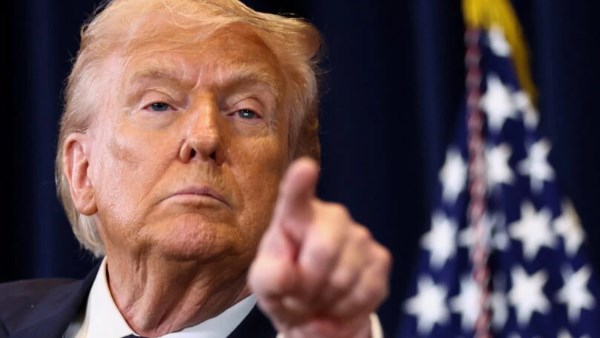
In recent weeks, statements by former US President Donald Trump have reflected a fluctuating posture oscillating between escalation and de-escalation. On one hand, he has invoked the doctrine of “maximum pressure,” including the prospect of imposing a naval blockade on Iran; on the other, he has emphasised the importance of reopening the Strait of Hormuz and safeguarding international navigation. In contrast, Iranian positions have remained firmly anchored in what Tehran defines as its “sovereign rights,” coupled with warnings of forceful retaliation — an indication of a fragile deterrence equilibrium that could unravel at any moment.
Meanwhile, the Gulf Cooperation Council (GCC) states have expressed deep concern over the persistence of escalation. While cautiously welcoming any temporary de-escalation, they have underscored the necessity of a durable and comprehensive agreement that ensures regional security and long-term stability. This stance reflects a growing Gulf awareness that a prolonged conflict would entail a sustained strategic drain extending far beyond the immediate theatre of confrontation.
The cost of war: Economic haemorrhage and strategic attrition
The region has already incurred significant losses, both direct and indirect. The World Bank has characterised the conflict as causing “substantial and immediate economic damage,” with noticeable declines in growth rates and sharp increases in energy and food prices. Growth projections across Gulf economies have been downgraded to approximately 1.3% for 2026, a stark contrast to pre-conflict expectations.
Iran itself is experiencing acute economic strain, with estimates suggesting daily losses exceeding $400 million due to maritime restrictions and disrupted oil exports. Global markets, in turn, have been roiled by volatility, particularly in energy prices, driven by persistent threats to supply chains.
From a security perspective, the conflict has triggered a surge in asymmetric warfare tactics, including missile strikes and drone attacks. This has eroded regional security confidence, elevated insurance and shipping costs, and dampened foreign investment inflows.
The Strait of Hormuz: A global chokepoint
At the heart of the crisis lies the Strait of Hormuz, through which approximately 20% of global oil supplies transit, rendering it one of the most critical arteries of the global economy. Its disruption has already delivered one of the most severe shocks in the history of energy markets.
The closure — or even partial obstruction — of this strategic passage has halted oil and gas shipments, driven sharp price increases, and intensified global inflationary pressures while disrupting supply chains. For Gulf states that rely almost entirely on this corridor for hydrocarbon exports, any threat to its security constitutes an existential economic risk.
Some projections suggest that a prolonged closure could remove up to one-fifth of global oil supply from the market — an unprecedented shock with far-reaching consequences for the global economy.
Environmental and security externalities
The ramifications of the conflict extend beyond economics and security into the environmental domain. Targeting energy infrastructure and the potential for large-scale oil spills in the Gulf pose the risk of a long-term ecological disaster, threatening marine biodiversity and fragile ecosystems.
Furthermore, the militarisation of maritime corridors and the increased density of military assets heighten the probability of unintended incidents that could trigger a broader and uncontrollable escalation.
Why an agreement is imperative now
Reaching a US–Iran agreement has transcended the realm of political choice; it is now an existential necessity for several reasons:
First, restoring economic stability: A viable agreement would ensure the secure reopening of the Strait of Hormuz, stabilise energy prices, and restore confidence in global markets — positively impacting economic growth regionally and globally.
Second, reducing military tensions: Such an agreement would lower the risk of direct and proxy confrontations, curb the regional arms race, and enable the reallocation of resources toward development rather than defense.
Third, strengthening regional security: It would lay the foundation for a cooperative security architecture based on dialogue and mutual understanding, rather than polarisation and conflict blocs.
Fourth, enabling joint development initiatives: A diplomatic breakthrough could unlock avenues for regional economic cooperation, particularly in renewable energy, infrastructure, and trade, enhancing long-term sustainability.
Fifth, mitigating environmental risks: De-escalation would reduce the likelihood of oil-related accidents and environmental degradation linked to military operations.
Toward a “security-for-development” paradigm
Historical experience consistently demonstrates that wars rarely yield lasting stability; instead, they generate recurring cycles of violence and uncertainty. Conversely, political agreements — however complex — open pathways toward sustainable development and durable peace.
Today, the United States and Iran face a binary strategic choice: continue along the path of escalation, with its mounting and indiscriminate costs, or pivot toward a framework of mutual understanding that delivers shared gains. Given the scale of losses and the gravity of challenges, the cost of peace now appears significantly lower than the cost of war.
The Arabian Gulf, with its profound strategic and economic significance, cannot remain hostage to an open-ended confrontation between two major powers. The global economy can no longer absorb additional shocks to energy or trade, and the region’s states urgently require stability to sustain their development trajectories.
In this context, a comprehensive US–Iran agreement should not be viewed merely as a political settlement, but as a forward-looking investment in the future of both the region and the world — one that redefines security not as a purely military construct, but as an integrated system grounded in stability, development, and shared prosperity.
ملاحظة تحريرية | Editorial Note: نُشر هذا المقال في الأصل بواسطة Gulf News. خبر (Khabr) هي منصة إعلامية أردنية مرخّصة تعمل بالذكاء الاصطناعي. نضيف قيمة تحريرية من خلال: تحليل ذكي للأخبار، ملخصات تلقائية، رواية صوتية بالذكاء الاصطناعي، ترجمة متعددة اللغات، وتدقيق الحقائق. هدفنا جعل الأخبار أكثر وضوحاً وسهولةً للقارئ العربي.
This article was originally published by Gulf News. Khabr is a licensed Jordanian AI-powered news platform (Registration #82086). We add editorial value through: AI-powered news analysis, automated summaries, AI audio narration, multi-language translation (Arabic, English, French, Turkish), and AI fact-checking. Our mission is to make news more accessible and understandable for Arabic-speaking audiences worldwide.