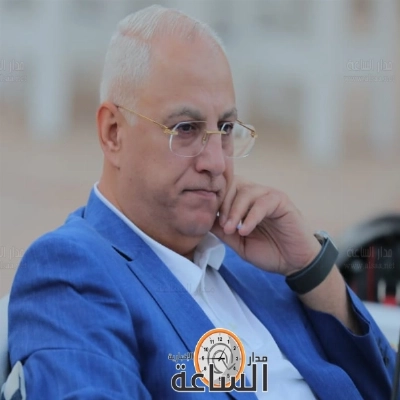
Syrian Petroleum Company CEO Youssef Qablawi announced on April 10 that the company had received official confirmation from US company Chevron to move ahead with offshore investment and exploration.
Qablawi said on X that the Syrian Petroleum Company, in cooperation with Chevron and UCC, had successfully identified the targeted offshore site.
This paves the way for completing the final contracts, Qablawi said, and for technical operations to begin in summer 2026. He added that the step would serve as a cornerstone for Syria’s first deepwater exploration project, boosting production, supporting the economy, and bringing the latest technologies into the country.
Enab Baladi sent a set of questions to the Syrian Petroleum Company asking about the expected size of Chevron’s investment at this stage, the project’s impact on the local energy sector, the expected timeframe for tangible results to begin appearing, and the Syrian government’s role in managing and monitoring the investment.
The company had not responded by the time this report was prepared.
Real Returns
Dr. Mahmoud Abdul Karim, an academic specializing in financial markets and energy, told Enab Baladi that the memorandum of understanding signed on February 4 between Syrian Petroleum, Chevron, and Qatar’s Power International does not mean production has begun. Rather, it marks the start of the assessment and seismic survey phase.
He added that a marine seismic survey alone can cost more than $200,000 per day, while exploratory drilling takes between six and 10 months. That is followed by a results assessment period of six months to a year, then additional appraisal drilling that can extend for two to three years before a development plan is implemented.
Once commercial viability is proven, Abdul Karim said, the stage of installing facilities and carrying out development drilling takes another year or more, with a total cost that may exceed $1 billion for a deepwater offshore production platform.
Abdul Karim noted that investment in offshore projects passes through five sequential stages that cannot be skipped:
- Geophysical survey.
- Exploratory drilling.
- Assessment and verification of commercial reserves.
- Engineering design and infrastructure construction.
- Development drilling and the start of production.
Each stage carries its own risks. Globally, the share of successful exploratory wells that uncover commercial reserves averages only 20 to 30%, meaning the chance of finding a commercial field worth developing in the first drilling round is not guaranteed.
Abdul Karim pointed to Egypt’s Zohr field, the region’s largest discovery, which was discovered in 2015 and did not reach full production capacity until 2019 after investments exceeding $12 billion. Egypt then shifted from a gas importer to an exporter, with liquefied natural gas exports reaching around 173 billion cubic feet in 2023.
The Egyptian lesson is highly important for Syria, Abdul Karim said, because their starting points are similar: decayed infrastructure, an energy market dependent on imports, and an urgent need for revenues to finance reconstruction.
In Syria’s case specifically, the academic said there are additional structural obstacles: Syria has no prior experience in offshore exploration, no existing offshore infrastructure, and no specialized technical workforce in this field.
He added that the legislative framework for offshore concession contracts has not yet been completed, and that international sanctions were lifted only recently, in mid-2025. That means the institutional and legal system needed to run such a project is still being built.
On that basis, Abdul Karim said that any actual cash flow from Syria’s offshore project will not materialize before 2032 in the best-case scenario, and could be delayed until 2035 if the surveys face technical or political setbacks.
Gross Domestic Product
Abdul Karim said Syria’s gross domestic product fell from $67.5 billion in 2011 to about $21.4 billion in 2024, a contraction of 53%.
As for the oil sector, he said it accounted for 20% of GDP before the war, nearly half of exports, and more than 50% of state revenues, when output stood at 390,000 barrels per day.
Today, total production ranges between 105,000 and 110,000 barrels per day. The oil sector alone has lost an estimated $91.5 billion in infrastructure, according to the Syrian Oil Ministry, while the United Nations estimates the total losses in the oil and gas sectors at $115 billion, Abdul Karim said.
To understand the expected scale of the impact on GDP, two completely different timeframes must be distinguished.
In the first phase, before actual production begins, there is still measurable economic value, even if indirect. Chevron’s expected $2 billion spending on surveys, drilling, and infrastructure over the coming years will create a multiplier effect in the local economy through hiring national staff, operating local suppliers, and building logistics capacity in the ports of Tartus and Baniyas, on Syria’s Mediterranean coast.
Studies of similar offshore projects indicate that every dollar spent during the development phase generates between $2 and $3 in the surrounding economy through supply chains, wages, and services.
In the second phase, once production begins, the figures become more significant, Abdul Karim said. If offshore production reaches 100,000 barrels per day for $70, annual revenue would reach $2.5 billion, equivalent to about 12% of the current GDP.
Adding the Syrian government’s goal of raising onshore production to 380,000 barrels per day by 2030, Abdul Karim said total energy revenues could exceed $10 billion annually. That would raise the sector’s share to between 35 and 45% of GDP, a level that alone would be enough to reverse Syria’s trade balance from chronic deficit to surplus.
He said achieving that scenario depends on two governing factors: oil prices remaining above $60 a barrel, and the completion of institutional reform in the energy sector.
Abdul Karim said the real challenge facing the energy sector now is not geographic control, but rehabilitating damaged infrastructure, which is estimated to cost more than $5 billion.
Forecasts suggest production could rise to 180,000 barrels per day by 2027 and return to pre-war levels of 380,000 barrels per day around 2030, making future offshore production an additional stream on top of restored onshore output, not a substitute for it.
Indicators of Success
The academic said four levels of indicators must be monitored in parallel.
At the contractual level, the shift from a memorandum of understanding to a legally binding concession agreement is the first real test of the seriousness of the partnership. The memorandum explicitly stipulated assigning an integrated team to turn the agreement into an executable contract. The decisive indicator here is the time needed to complete that shift. If it exceeds 18 months, that would signal legal or political complications obstructing progress.
At the legislative and investment framework level, the continued lifting of sanctions and the creation of a clear tax and legal system are indispensable. The precise indicators here include issuing an investment law for the offshore energy sector, setting the state royalty rate on production, defining the mechanism for dispute settlement between partners, and clarifying how profits can be transferred abroad.
Comparative experience in the region indicates that a royalty rate of 10 to 20%, with a profit tax of 25 to 35%, is the range most attractive to foreign investment during the exploration stage.
At the operational level, the shift from seismic surveys to exploratory drilling according to the agreed schedules is the project’s technical compass.
The number of wells drilled annually, their success rate, the daily flow rate once a discovery is confirmed, and the extraction cost per barrel compared with the regional benchmark of $4 to $8 per barrel in eastern Mediterranean fields should all be monitored. Any extraction cost above $15 per barrel in Syria’s case would redraw the entire economic feasibility equation.
Finally, at the macroeconomic level, the oil sector’s share of GDP and the ratio of energy revenues to the state budget should be tracked. These were the two indicators that accounted for 18% of GDP and 50% of state revenues before 2011.
Returning to those levels requires not only the offshore project to succeed, but also onshore production to recover to previous levels. Abdul Karim said that path has become geopolitically possible after the January agreement between the government and the Syrian Democratic Forces, but it still depends on rehabilitation investments exceeding $5 billion and on the government’s ability to entrench field stability in the northeast and turn the political agreement into an actual operational reality.
Syrian, American, Qatari Memorandum
On February 4, the Syrian Petroleum Company signed a memorandum of understanding with Chevron International and Power International Holding to explore Syria’s first offshore oil field.
The Syrian Ministry of Energy said the memorandum opens new horizons for offshore exploration and oil and gas prospecting in Syria’s territorial waters, in a way that contributes to developing the oil sector and strengthening national energy security.
The post Chevron Moves Into Syrian Offshore Energy Project appeared first on Enab Baladi.