Breaking the negative narrative: How the Gulf changed the region’s story
المصدر: Gulf News | Source: Gulf NewsThe words we hear in our childhood rarely pass through our lives unnoticed.
They linger like a cloud in the mind, reminding us — every time the rain of their conversations falls — of the thorns of negativity. For years, that narrative persisted in the minds of many across the region we share in language and faith. Yet today it has become little more than a passing summer cloud, reminding us of the pessimism that once surrounded us and of what has been achieved despite it.
From the gates of school in the early 1990s — without even going further back — many teachers repeated words of discouragement more often than they encouraged their students. They diminished themselves before discouraging their pupils. Over time we discovered that these words were not fleeting remarks, but inherited ideas deeply rooted in their societies, echoed in newspapers, books, and cafes, planting a negative narrative about identity and the future in the minds of generations.
We do not blame them entirely. They were products of a period shaped by competing ideologies — leftist, nationalist, and Islamist — alongside successive wars that exhausted the region. But the question that imposes itself today is simple: Has the world not changed?
Over the past three decades, the region has witnessed transformations that reshaped many assumptions. We saw an Arab Gulf state occupied within 24 hours in the early 1990s when the Iraqi regime invaded Kuwait. Sadly, some voices across the region even sided with the aggressor. Then came the 2003 Iraq war, exposing the scale of instability the region was living through. Yet the Gulf’s development did not begin in those moments; it had already started years earlier through an early vision to build modern states, diversify economies, and invest in people.
Narratives trapped in the past
As time passed, this path expanded while certain narratives elsewhere remained trapped in the past, unable to read the transformations unfolding before them. For years, the same claim was repeated: that the Gulf was backward while the world had already reached space. Ironically, Gulf states today are part of the global race in science, technology, and even space exploration.
They asked: Why build airports, ports, railways, and towers?
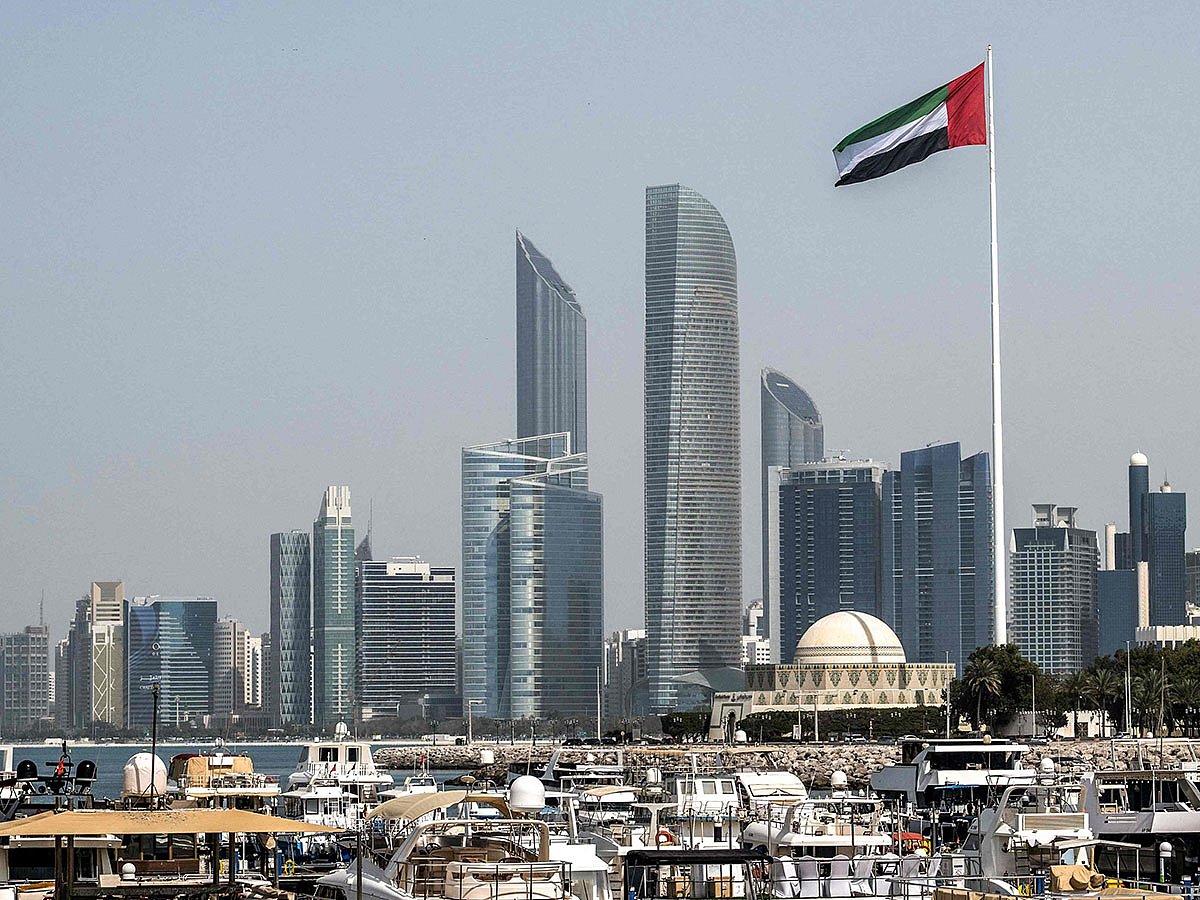
But these projects were never mere architectural displays, as some imagined. They were economic and strategic visions. Today, Gulf cities — Dubai foremost among them — have become global hubs for trade, tourism, and investment, with people from around the world lining up to live, invest, and build their futures there.
They insisted that oil was the Gulf’s only tool. Yet reality changed. In several economic cities across the region, oil now represents only a limited share of activity, while tourism, services, and knowledge-based industries have become key engines of growth.
More questions
So what economy are they still talking about?
What reality do they still imagine?
Are they prisoners of outdated historical images?
They once claimed to hold the monopoly on knowledge and enlightenment. But the compass has shifted. Today, the Gulf hosts universities ranked among the world’s best, and its educational environments attract students and researchers from across the globe. The medical sector has also advanced significantly, with Gulf cities becoming destinations for specialised treatment.
On the humanitarian front, Gulf states — particularly the United Arab Emirates — have built a different model, one rooted in hope and humanitarian action. Their aid and development programmes have reached East and West alike, often becoming among the largest sources of support for countries in the region itself and for major causes, foremost among them the Palestinian cause.
Yet some still insist on ignoring these realities.
Across the region, influential cultural and developmental initiatives have been launched — from promoting reading and scientific innovation to discovering Arab talents and hosting international book fairs that are now among the largest in the world. But such initiatives remain invisible to those who insist on reading reality through the lens of pessimism.
When Gulf states entered the arena of international politics, they did so through calm and accurate readings of global transformations, building strong partnerships based on mutual interests and long-term stability. In contrast, others continued to repeat grand slogans about protecting the region and leading its battles — slogans that proved unable to withstand real challenges.
Development models
The success of certain development models also exposed the scale of failure embedded in some political and intellectual narratives in the region. This was one of the underlying factors behind the political and social explosions that later became known as the Arab Spring. Regimes changed, governments fell, and some countries eventually stabilised after years of turmoil. Yet the deeper problem was not only political systems — it was a collective mindset that had not changed sufficiently.
In recent years, the region has faced multiple attempts at destabilisation. Yet Gulf societies remained stable, with citizens and residents continuing their daily lives normally. This stability was not accidental. It was the result of strong institutions and resilient internal systems. The true strength of nations is not measured only by buildings and infrastructure, but by the solidity of their institutions and their ability to manage crises and protect society.
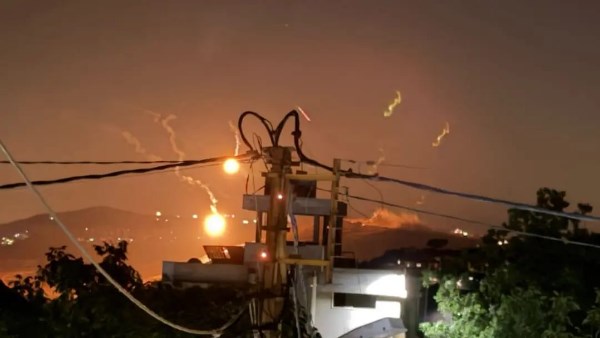
We built our own intellectuals and academic communities, drew upon the world’s best expertise, and developed tolerant, modern societies that attract people from every corner of the globe. We were once told that a single Iranian missile would cause foreigners to flee the Gulf. Yet the opposite happened. Even amid Iranian missiles and drones, social cohesion grew stronger and daily life continued largely uninterrupted. Some aircraft sent by foreign governments to evacuate their citizens even returned empty, as many residents chose to stay — having seen a cohesive society, strong systems, and defensive capabilities capable of intercepting thousands of missiles and drones.
Strong armed forces
At the same time, we built armed forces capable of safeguarding stability in a region where crises rarely pause for a decade. This required building strong internal systems — far stronger than the visible symbols of prosperity that some observers focus on.
As the era of advanced technologies unfolds, Gulf states have begun investing heavily in future fields such as artificial intelligence and advanced technologies, recognising that global competition in the coming decades will be fought in the arena of knowledge and innovation.
Human nature often gravitates toward negative news. That is simply part of how people are wired. But the real question today is:
Has the time not come for these narratives to change — narratives that fight success because it exposes failure?
Has the time not come for some societies to reconcile with themselves, to move beyond emotional populist rhetoric, and instead adopt realistic and constructive ways of thinking, even in difficult circumstances?
A model that inspires others
Our hands have always been extended with our expertise and investments. The success of the Gulf should not be a cause for division. On the contrary, it can serve as a model that inspires others. Because the future is not built on slogans, nor on inherited narratives that no longer reflect reality. It is built on vision, institutions, and the courage to confront the truth—even when it is uncomfortable.
The Gulf did not change the region’s story through words, but through consistent action, long-term planning, and an unwavering belief in its people. It chose to invest in stability when others invested in chaos, to build when others chose to destroy, and to look forward while others remained trapped in the past.
This is not a claim of perfection, nor a denial of challenges. Every development model has its own tests. But what distinguishes the Gulf experience is its ability to adapt, to learn, and to evolve—without losing its identity or stability.
The real shift today is not only economic or political. It is intellectual. It is the transition from a mindset that explains failure… to one that builds success.
And perhaps the most important question that remains is not whether the Gulf has changed the narrative. But whether others are ready to change theirs.
Mustafa Al Zarooni is an Emirati journalist and political analyst
ملاحظة تحريرية | Editorial Note: نُشر هذا المقال في الأصل بواسطة Gulf News. خبر (Khabr) هي منصة إعلامية أردنية مرخّصة تعمل بالذكاء الاصطناعي. نضيف قيمة تحريرية من خلال: تحليل ذكي للأخبار، ملخصات تلقائية، رواية صوتية بالذكاء الاصطناعي، ترجمة متعددة اللغات، وتدقيق الحقائق. هدفنا جعل الأخبار أكثر وضوحاً وسهولةً للقارئ العربي.
This article was originally published by Gulf News. Khabr is a licensed Jordanian AI-powered news platform (Registration #82086). We add editorial value through: AI-powered news analysis, automated summaries, AI audio narration, multi-language translation (Arabic, English, French, Turkish), and AI fact-checking. Our mission is to make news more accessible and understandable for Arabic-speaking audiences worldwide.