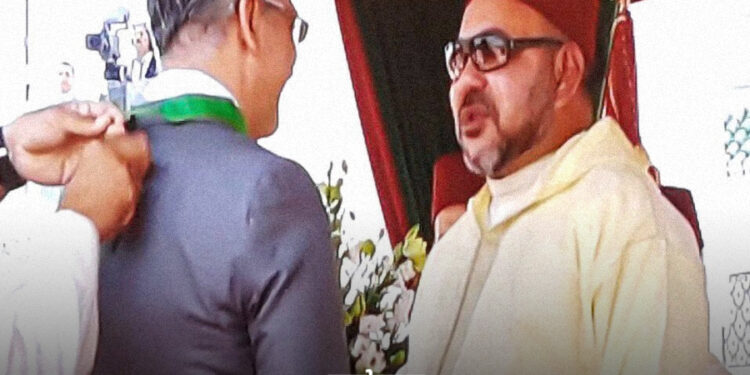
Agadir – Khalid Sehouli, known as Jalid Sehouli, has been appointed president of the European Society of Gynaecological Oncology (ESGO) on February 27, becoming the first Moroccan, Arab, and Muslim to hold this position in one of Europe’s leading organizations in gynecological oncology.
“I see it as a clear mandate: to connect continents and to contribute to improving women’s healthcare globally. It is a responsibility to open doors, to build bridges, and to bring different realities of care closer together. Representation matters—not as a symbol, but as a commitment to action,” Sehouli told Morocco World News in an interview (MWN).
Sehouli was born in Germany to Moroccan parents from Tangier. He held several positions, including professorship at Charité – Universitätsmedizin Berlin, where he currently serves as head of the Department of Gynecologic Oncology.
In addition to his clinical work, Sehouli is an editor for multiple scientific journals and the author of more than 1,000 publications in gynecology, with a focus on diagnosis, treatment, and aftercare in gynecological oncology.
Sehouli’s early journey
During his childhood, Sehouli was passionate about football and even played for the German football team. However, academically, he struggled, and his parents were unable to support him in his studies, as neither of them had attended school.
Despite this, his family significantly contributed to shaping his path. His mother, who never received a formal education, worked in a hospital as a ward assistant, caring for patients in what he describes as “moments when dignity mattered most.”
“This shaped my understanding of medicine very early,” Sehouli told MWN. “It is not about titles—it is about responsibility.”
‘It was not only the science, it was the encounter’
Sehouli said his mother played a key role in inspiring his decision to pursue a career in medicine. “She was suffering from several illnesses, including diabetes and pain. I wanted to help her, and I began to think—why not go into medicine and take care of patients?” he said.
Alongside this motivation, Sehouli developed an early curiosity for science. “I studied my animals at home. I observed my fish… I was really interested in life,” he elaborated.
For Sehouli, specializing in gynecological oncology was shaped as much by human encounters as by scientific curiosity.
He began his career as a nurse, where he was first exposed to women battling cancer, patients he described as strong and resilient, yet often confronted with limited treatment options. “It was not only the science—it was the encounter,” he explains.
That early experience left a lasting impression, motivating him to go further: “I wanted to do more, to learn from the best, to contribute to research and to open new paths where there were none.”
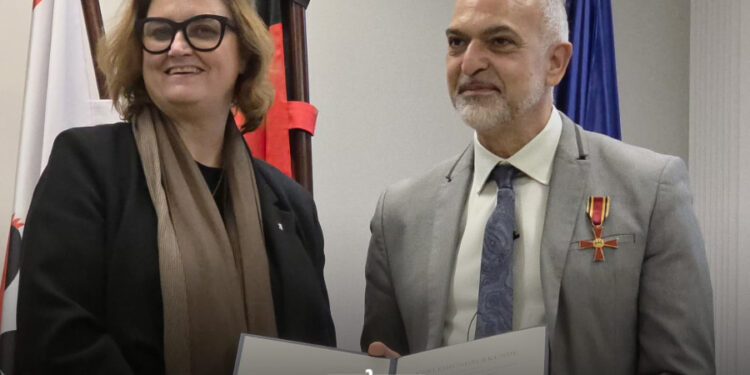
While science, he notes, is essential for creating new knowledge, its value lies in its ability to reach patients. “ Gynecological oncology brings you very close to the core of a person’s life—identity, fear, hope, and vulnerability. You are not only treating a disease. You are entering a life. This field requires more than knowledge. It requires presence,” Sehouli said in his interview with MWN.
Medicine goes beyond treatments
Sehouli recalls an experience in his career that defined his understanding of medicine more than any academic milestone.
He shared operating on an elderly woman with ovarian cancer—a procedure that was, by all clinical measures, successful. “Medically, everything was under control,” he added. But on the very same day, the patient’s husband took his own life.
In the aftermath, Sehouli and his team faced a moment of profound uncertainty: “Who would tell her?”
“We stood there as a team, and no one knew how to take responsibility for that moment. Including me,” he said.
That moment made Sehouli understand medicine cannot be reduced to “only surgery, drugs, or survival curves. It is about truth, responsibility, and human connection — especially in the most difficult moments.”
The experience shaped his approach to care, pushing him to rethink how doctors communicate with and support patients beyond the purely medical act. “If I am in a leadership position today, it is because of moments like that,” he reflects. “moments where medicine revealed its limits, and at the same time, its true meaning.”
‘You do not have to choose between worlds’
Sehouli embraces both his German and Moroccan identities, viewing this dual heritage not as a conflict but as a source of strength. “I carry both identities. I hold both passports—Moroccan and German. For me, this is not a contradiction. It is a perspective,” he told MWN
“I was born into a Moroccan family, shaped by different cultures, languages, and realities. For a long time, this felt like a tension. Later, I understood: it is a strength.”
This perspective reflects a broader message: being rooted in a Moroccan background while engaging with diverse cultures can initially feel challenging, but ultimately enables individuals to build meaningful bridges, “connecting science and humanity, medicine and art, Europe and Africa, tradition and innovation.”
Throughout a career grounded in this mindset, Sehouli shaped his own approach in practicing medicine.
“In my career, I tried to follow this path. As a physician, I focused on patients — not only on their disease. As a scientist, I worked on evidence — but always with meaning. And beyond that, I built collaborations between countries, institutions, and people,” Sehouli said.
“If there is one value behind all of this, it is responsibility. Responsibility to give something back. Responsibility to open doors for others. Responsibility to stay human, even in highly specialized environments,” he added.
Where you come from is not a barrier, but the very foundation on which you can build something meaningful.
Turning excellence into global impact
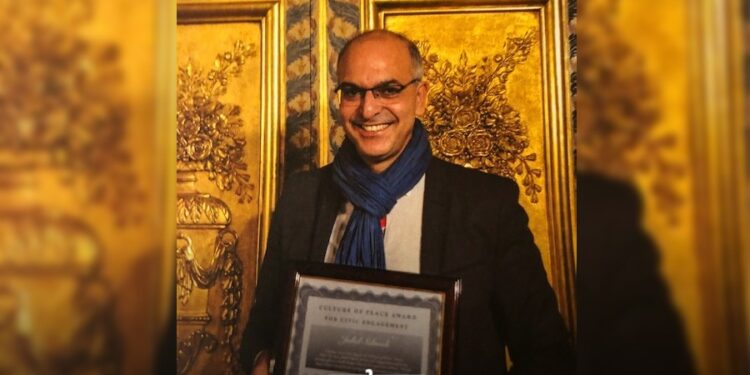
Sehouli, philosophy of where you come from is not a limitation, but its foundation extends beyond personal identity to shape his vision for the future of the European Society of Gynaecological Oncology under his presidency.
He describes the organization as standing at a “turning point,” after years of building scientific excellence, the next step is to translate that expertise into tangible impact for patients everywhere, across all countries and healthcare systems.
A key moment in this shift will take place in Marrakesh, where ESGO will hold its first-ever Council meeting outside Europe, an event Sehouli views as more than symbolic.
“We will discuss an agenda for 2025 and beyond — an agenda that aims to shape the future of women’s cancer care globally. This reflects my vision: to open ESGO, to connect continents, to build true partnerships beyond traditional borders,” Sehouli shared with MWN.
This direction is built on three core priorities. First, “we must break down silos. The future of gynecological oncology lies in real collaboration — across disciplines, professions, and regions.” Second, “we must anchor everything we do in the patient perspective. Not as an add-on, but as the starting point of research, care, and innovation.” Third, “we must empower the next generation. ESGO should become a home for young clinicians and scientists — a place where talent is supported, challenged, and globally connected.”
Equally important, Sehouli emphasizes the need for continuous self-reflection within the field. Progress, he argues, requires the courage to question established standards and rethink routine practices.
“Progress in medicine only happens when we are willing to evolve. If we succeed, ESGO will not only be a leading scientific society. It will be a global movement — connecting science, responsibility, and humanity,” Sehouli concluded.
The post ‘Breaking Barriers’: Jalid Sehouli Becomes First Arab-Muslim President of ESGO appeared first on Morocco World News.