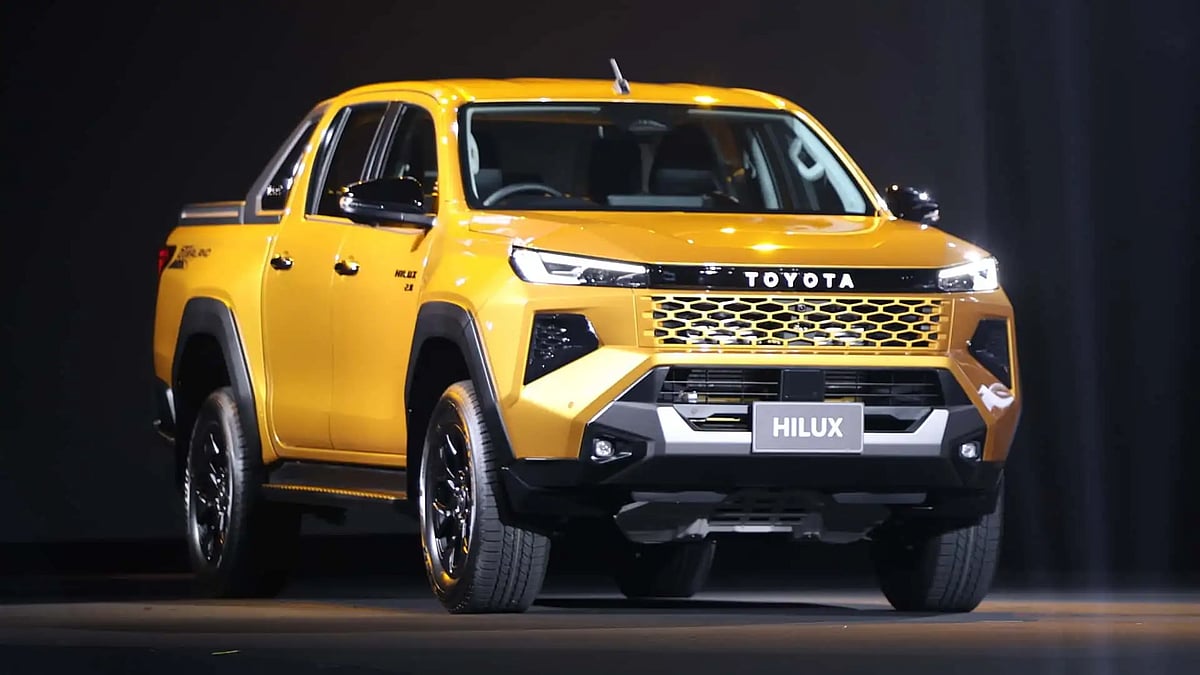
Manila: The all-electric Toyota Hilux, known as the high-performance Hilux Travo-e or Hilux Revo BEV, is edging closer to Philippine roads.
The Philippine Department of Energy added the model to its official roster of recognised electric vehicles, industry media reported.
Toyota Motor Philippines has steadily expanded its electrified line-up, rolling out two additional models to strengthen its presence in the EV and hybrid space.
These include the fully electric Urban Cruiser and the sixth-generation Toyota RAV4, which now comes standard with all-wheel drive and hybrid power.
With these introductions setting the stage, industry watchers expect the electric Hilux to make its Philippine debut within the next few months.
Its arrival will likely be followed by the entry of two new Land Cruiser variants, signalling Toyota’s accelerated electrification push in the country.
Details from the DOE database provide the clearest picture yet of what buyers can expect.
Drive train, battery
The electric Hilux is listed with a 4x4 drivetrain paired to a sizeable 59.2kWh battery pack.
Output is projected at around 193 horsepower, with a driving range of approximately 300 kilometres on a single charge.
While final figures will be confirmed by Toyota’s local office, these early specifications suggest a workhorse that balances utility with everyday usability — crucial in a market where pickups serve both commercial and personal roles.
Double cab only, with AWD as standard
The revamped Toyota Hilux will be offered exclusively in a double-cab configuration, with electric power steering and all-wheel drive fitted across the range.
The setup underscores Toyota’s intent to position the electric pickup as both a practical workhorse and a lifestyle vehicle, rather than a stripped-down fleet model.
Infotainment
Inside, the cabin takes a distinctly modern turn.
A horizontally oriented infotainment screen measuring up to 12.3 inches dominates the dashboard, matched by a digital driver’s display of the same size.
The twin-screen layout gives the Hilux an interior that feels closer to a contemporary SUV than a traditional utility pickup.
The range question
The appeal begins to fade, however, when attention turns to the battery and driving range.
The electric Hilux is equipped with a 59.2 kWh lithium-ion battery, delivering a WLTP-rated range of around 149 miles, or roughly 240 kilometres on a full charge.
On paper, that figure appears modest for a vehicle expected to serve both work and long-distance duties.
For context, the Rivian R1T offers between 270 and 420 miles of EPA-rated range depending on battery size — nearly double, or even triple, what the Hilux achieves under European testing standards.
It’s also important to note that the WLTP cycle used in Europe is generally less stringent than the US EPA testing protocol.
In real-world EPA-equivalent terms, the Hilux’s effective advertised range could dip below 130 miles (209km).
Mixed reactions
For a nameplate long associated with durability, endurance, and go-anywhere capability, this electric range may be the biggest hurdle Toyota will need to overcome in convincing traditional Hilux buyers to make the switch.
When the model made its global debut in Thailand in November 2025, reactions were mixed, largely due to its heavily revised design language.
Traditional Hilux fans were divided over the sharper, more modern styling that departed from the familiar rugged look of earlier generations.
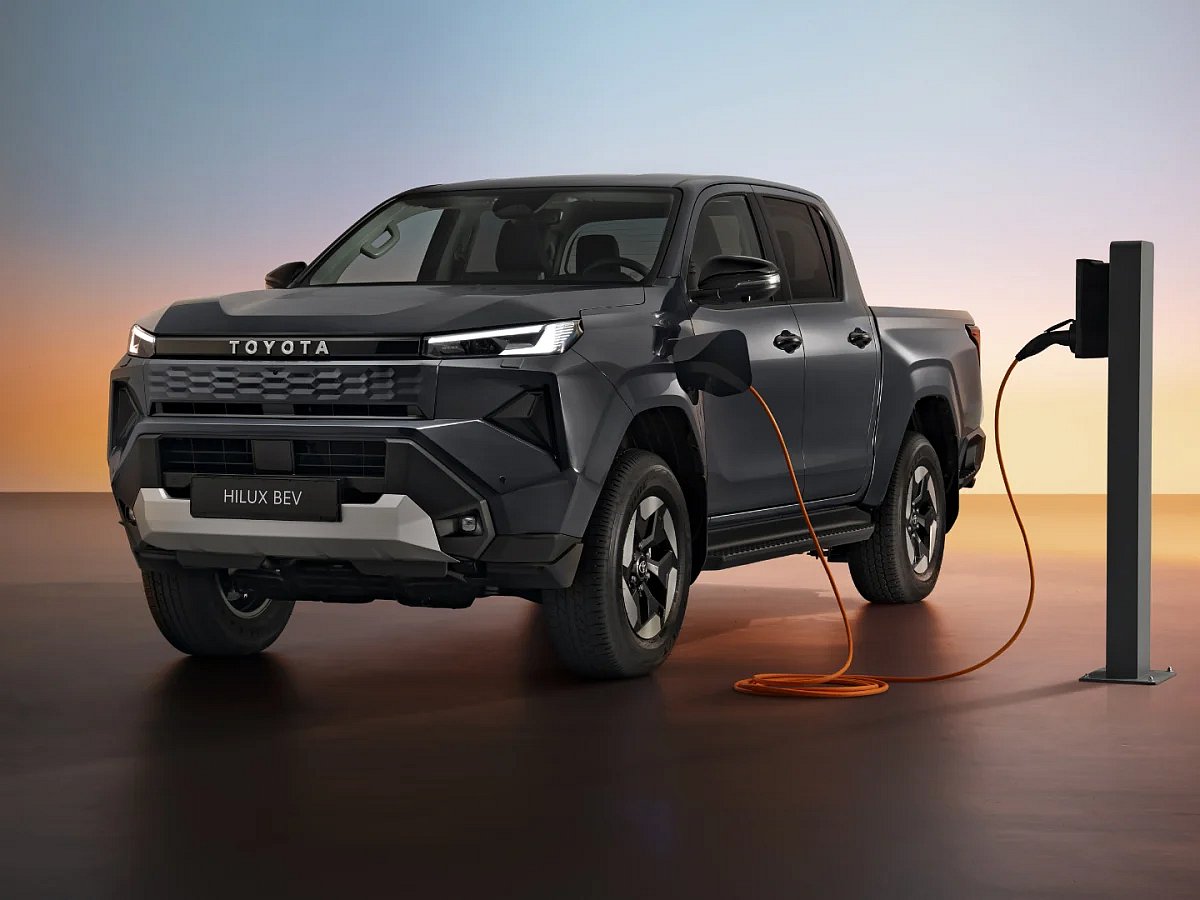
Observers noted that the pickup “looked better in the metal” than in early press images — a sentiment echoed by Top Gear reviewers who saw it up close.
While it may not be the most conventionally handsome Hilux ever made, subsequent photos and walk-around videos have shown a pickup with strong road presence and a distinctly modern character.
For many enthusiasts, curiosity has replaced scepticism, particularly around how the electric version will perform in real-world Philippine conditions.
That question is especially relevant in a country where the Hilux nameplate enjoys near-legendary status for durability and reliability.
New alternative
The electric version will be sold alongside traditional diesel variants, offering buyers a new alternative rather than a replacement.
This dual offering may ease the transition for conservative pickup buyers who are intrigued by EV technology but hesitant to fully abandon diesel power.
The fully electric pickup segment remains in its infancy, both globally and locally. Few manufacturers have ventured into this space with proven nameplates.
Toyota’s decision to electrify one of its most iconic models could prove pivotal, nudging the market forward by attaching EV technology to a badge Filipino motorists already trust.
If expectations hold, the electric Hilux won’t just be another EV launch. It could mark a turning point for how pickups — long associated with diesel engines and rugged simplicity — evolve in an electrified future.
Price
Bangkok media reports that official local Thai pricing for the final production model, known as the Hilux Travo-e or Hilux Revo BEV, is still finalising amidst competitive market launches.
However, based on recently-confirmed pricing for the Australian market (as of March/April 2026), the all-electric Toyota HiLux BEV starts at AUD$74,990, which converts to approximately $52,000.