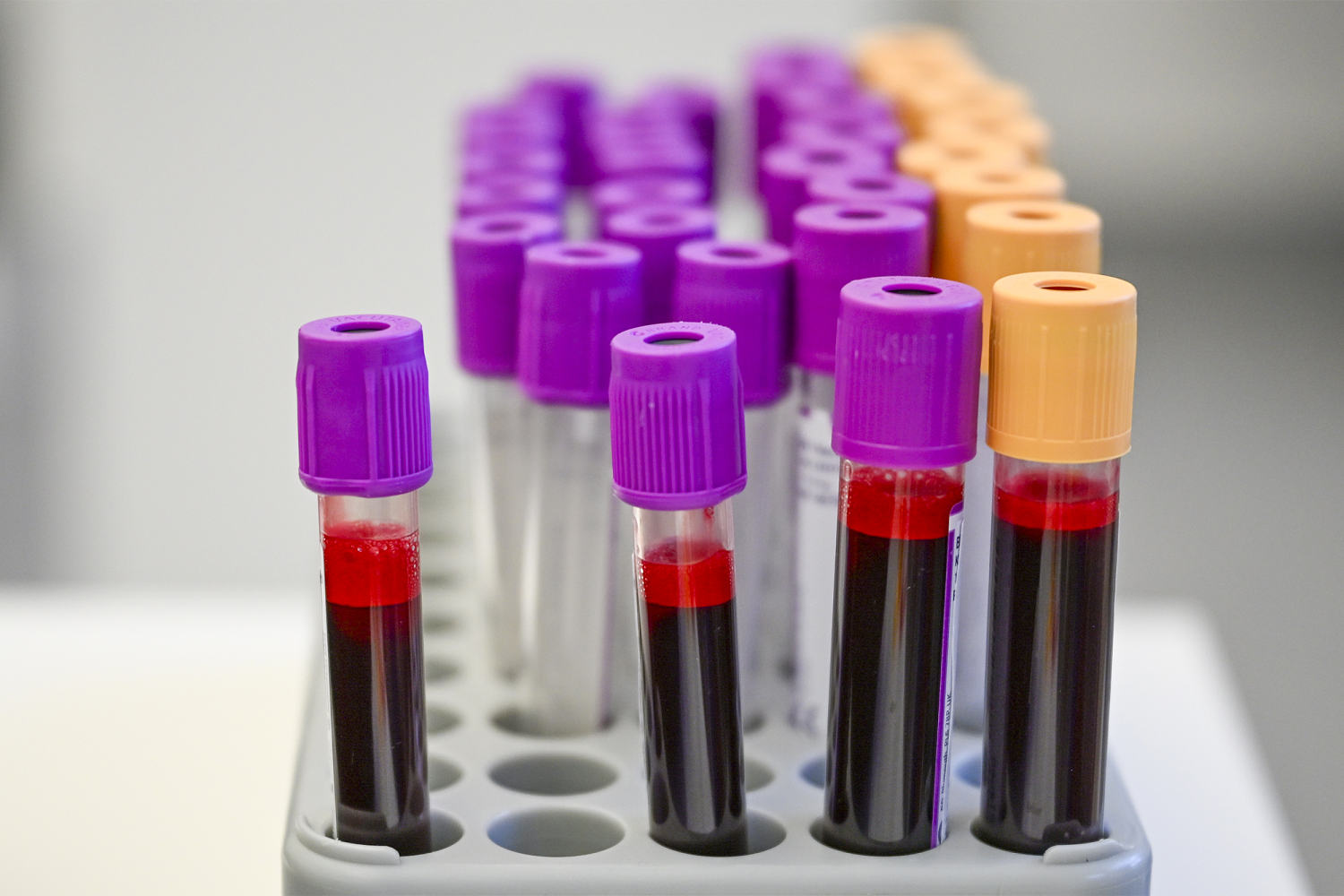
Are cancer-screening blood tests close to prime time?
•CancerAre cancer-screening blood tests close to prime time?Earlier this year, the largest trial to date on cancer blood tests failed to reach its primary objective.
•Oncologists haven't lost hope.
•Listen to this article with a free account00:0000:00Cancer blood tests pick up tiny amounts of DNA circulating in the blood.
هذا الخبر من NBC News. خبر يقدم أدوات ذكاء اصطناعي للتلخيص والترجمة والاستماع.
CancerAre cancer-screening blood tests close to prime time?Earlier this year, the largest trial to date on cancer blood tests failed to reach its primary objective. Oncologists haven't lost hope. Listen to this article with a free account00:0000:00Cancer blood tests pick up tiny amounts of DNA circulating in the blood. Jens Kalaene / dpa/picture alliance via Getty ImagesShareAdd NBC News to GoogleApril 21, 2026, 5:49 PM EDTBy David CoxThe vision of a single blood test that could screen for dozens of different cancers has tantalized oncologists for more than a decade. Subscribe to read this story ad-free Get unlimited access to ad-free articles and exclusive content.The science has advanced at a rapid clip: What began by analyzing levels of proteins in the blood has progressed to scrutinizing tiny amounts of DNA and feeding the data into algorithms that can highlight changes suggestive of cancer.It’s led to a number of eye-catching developments. In one study, a blood test called Mercury was able to correctly identify 13 cancers with an average of 87% accuracy, including 77% of stage 1 cancers. “It’s amazing we can even do this,” says Dr. Aadel Chaudhuri, a radiation oncologist at the Mayo Clinic in Rochester, Minnesota, who himself is researching multi-cancer blood tests. “If you had asked me 10 years ago, my answer would have been ‘It’s not feasible.’ If we’re thinking of DNA shed from a small tumor, it’s like being on the beltway in D.C. and you’re looking for one Volkswagen.”The ultimate hope is a test that would be able to accurately detect a range of cancers at an early enough stage where they are still curable. That would translate into lives saved. But in February came disappointing news: The largest trial to date on cancer blood tests failed to achieve its primary objective. The trial was run by Grail, a biotechnology company that manufactures a test called Galleri that, it says, can detect more than 50 different types of cancer through measuring DNA fra...المصدر: NBC News | Source: NBC News
ملاحظة تحريرية | Editorial Note: نُشر هذا المقال في الأصل بواسطة NBC News. خبر (Khabr) هي منصة إعلامية أردنية مرخّصة تعمل بالذكاء الاصطناعي. نضيف قيمة تحريرية من خلال: تحليل ذكي للأخبار، ملخصات تلقائية، رواية صوتية بالذكاء الاصطناعي، ترجمة متعددة اللغات، وتدقيق الحقائق. هدفنا جعل الأخبار أكثر وضوحاً وسهولةً للقارئ العربي.
This article was originally published by NBC News. Khabr is a licensed Jordanian AI-powered news platform (Registration #82086). We add editorial value through: AI-powered news analysis, automated summaries, AI audio narration, multi-language translation (Arabic, English, French, Turkish), and AI fact-checking. Our mission is to make news more accessible and understandable for Arabic-speaking audiences worldwide.