Maritime transit through the Strait of Hormuz has shifted to a "dual-corridor system," combining a northern route controlled by Iran's Islamic Revolutionary Guard Corps (IRGC) and a newly established southern pathway along the Omani coast, a London-headquartered maritime analytics firm said on Sunday.
According to a report released by Windward, a total of 11 vessels transited the Strait on April 5, including three inbound and eight outbound movements. All inbound vessels were tankers, while outbound traffic included both tankers and cargo vessels.
Outbound flows were split between the two routes. Five vessels transited through the northern corridor near Larak Island, which remains under IRGC control, while three vessels used the southern corridor along the Omani coastline.
The report noted that the northern route continues to operate under IRGC control centered around Larak Island. Meanwhile, the emergence of the southern corridor allows vessels to transit outside the original control zone.
Data showed that the southern corridor became operational on April 2, when three vessels, including two very large crude carriers and one liquefied natural gas (LNG) carrier, used the route. This marked the first LNG transit through the Strait since the outbreak of hostilities.
On April 3, 4 and 5, the number of vessels using the southern corridor stood at two, four and three, respectively. The report said the pace of development indicates a rapid shift from limited initial use to coordinated multi-vessel operations.
The Strait of Hormuz, a key global energy shipping chokepoint, has seen a sharp decline in vessel traffic following large-scale military actions launched by the United States and Israel against Iran on Feb. 28 and subsequent retaliatory strikes by Iran.
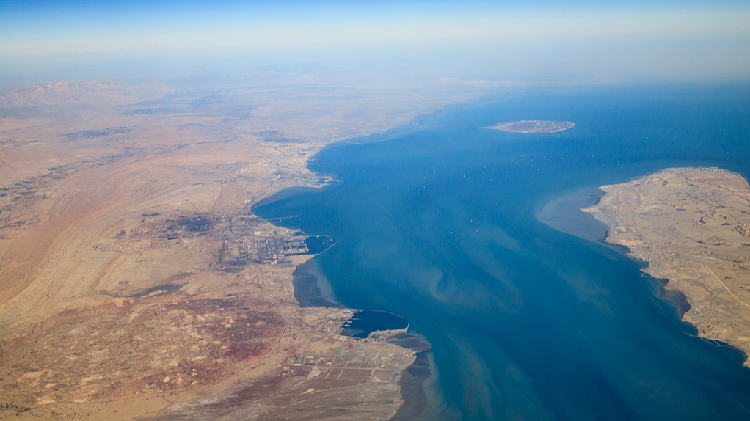
(Cover: A file photo of the Strait of Hormuz. /VCG)