• Says cybercrime, anti-terror laws are weaponised to silence voices; authorities pull ads from critical newspapers
• Warns world faces unprecedented rights crisis; cites use of AI, tech to expand surveillance, curb online dissent
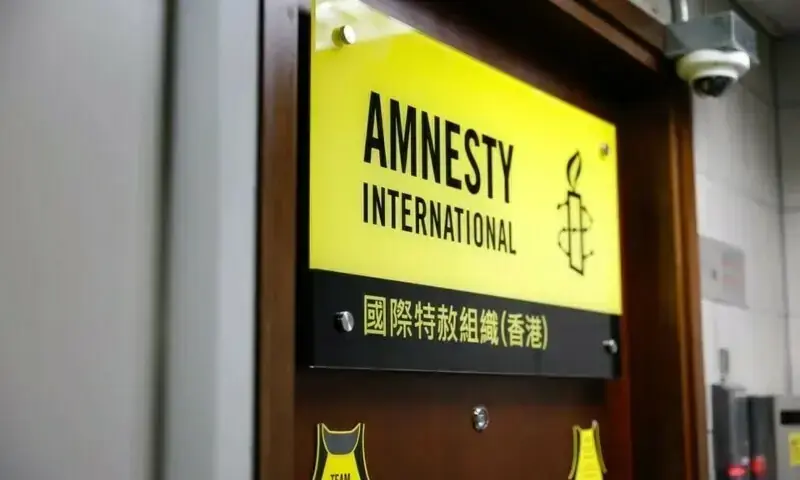
LONDON: Global rights watchdog Amnesty International released its annual report on Tuesday, delivering a stark warning that the world is confronting its “most challenging moment” as fundamental human rights are under a direct and escalating assault globally.
Amnesty’s Secretary General Agnès Callamard said the report, The State of the World’s Human Rights 2026, marks a moment that is fundamentally different, reflecting not a gradual erosion but a deep global crisis.
“What marks this moment as fundamentally different is that we’re no longer documenting erosion around the system’s edges,” Callamard said. “This is a direct assault on the foundations of human rights and the international rules-based order by the most powerful actors for the purpose of control, impunity and profit.”
The report, spanning over 400 pages with findings on 144 countries, featured Pakistan prominently, detailing a sustained pattern of restrictions on civil liberties, including curbs on freedom of expression, peaceful assembly and political participation.
Pakistan’s rights report card
Amnesty noted changes to online speech and anti-terrorism laws in Pakistan significantly impacted freedom of expression and peaceful assembly, leading to the detention of journalists, activists and opposition members.
On legislative changes, the report pointed to the 27th Amendment, which it said “significantly undermined the independence of the higher judiciary and provided broad immunity to the heads of the armed forces and the president”.
Authorities continued to use detention as well as cybercrime and anti-terror laws to suppress freedom of expression. The report cited censorship of online content, including arbitrary shutdowns by the Pakistan Telecommunication Authority (PTA), and noted that Pakistan updated its web monitoring system with technology from China. It also mentioned that authorities selectively withdrew advertising from newspapers as retaliation for critical reporting.
Enforced disappearances remained a significant concern. Protests by Baloch activists in Balochistan and Sindh were curtailed, and during a protest by the Baloch Yakjethi Committee on March 21 calling for the release of forcibly disappeared activists, three protesters were killed by law enforcement.
Regarding the crackdown on the opposition PTI, the report stated that over 100 PTI leaders and activists were convicted by anti-terrorism courts in cases related to the May 9, 2023 protests.
Those convicted included opposition leaders Omer Ayub and Shibli Faraz, MNA Zartaj Gul, and activist Khadija Shah.
PTI founder Imran Khan remained in jail on “politically motivated charges,” the report said, citing that he had been kept in solitary confinement and denied access to legal counsel.
Violence against women continued unabated. The report cited the organisation Sahil as recording a 25 per cent rise in reported cases over an 11-month period.
Journalists and human rights defenders were frequently targeted under the Pakistan Electronic Crimes Act (Peca). The report named journalists Asad Toor and Sohrab Barkat as being barred from leaving the country, with Barkat later charged under Peca.
It said human rights defenders, like Imaan Mazari and Hadi Ali Chatta, were criminally charged for social media posts, raising due process concerns. Tensions with India led to more arrests over online expression. The report also noted the targeting of activists from marginalised communities.
Global trends
Beyond Pakistan, the report painted a grim picture of the global landscape, noting the spiraling conflict in the Middle East as a “product of this descent into lawlessness”.
In the Middle East, Amnesty reiterated its findings that Israel committed war crimes and crimes against humanity against Palestinians in Gaza.
In India, the report highlighted the use of national security laws to detain activists and suppress dissent, noting a shrinking space for civil society and the targeting of minority communities.
Amnesty’s analysis underscored a convergence of crises, including armed conflicts in Ukraine, Sudan and Myanmar marked by widespread violations of international law. It also noted the intensification of authoritarian practices in traditionally democratic countries, with crackdowns on protests reported in the United Kingdom and the United States.
The report also highlights systemic discrimination, noting that refugees, migrants and racialised communities have borne the brunt of restrictive policies. Gender-based violence have increased, while economic inequalities and climate-related disasters have further exacerbated vulnerabilities.
According to Amnesty, technology enables repression through increased surveillance and online censorship and unchecked AI growth may solidify current abuses.
Despite the bleak assessment, the report pointed to pockets of resistance through civil society movements and legal challenges.
Published in Dawn, April 21st, 2026