Amid firestorm over delimitation, Bengal, TN polls, why Parliament should rise to clear women’s quota
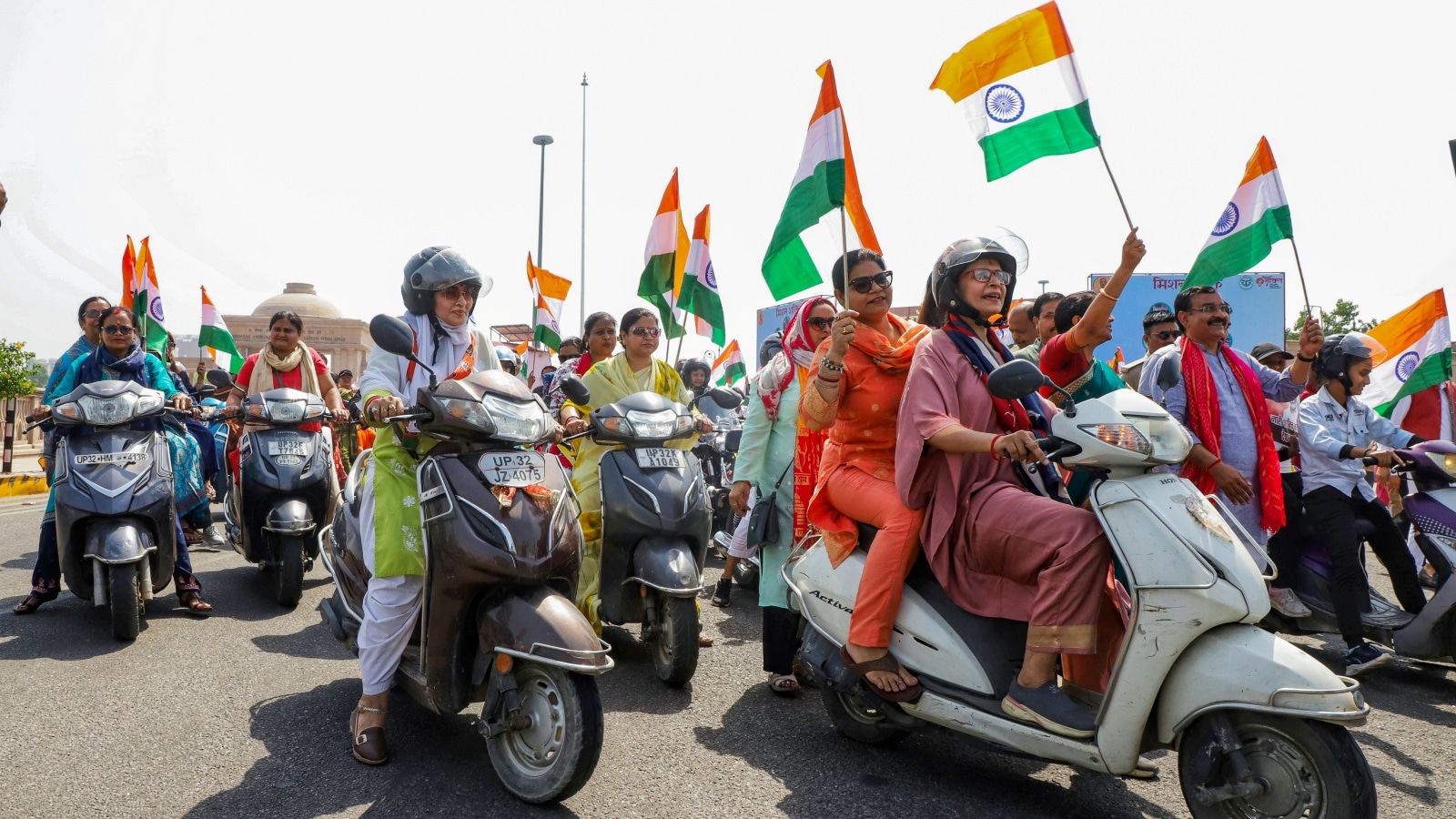
The Opposition has questioned why the special sitting of Parliament during April 16-18 to clear the Bills to operationalise the Nari Shakti Vandan Ahiniyam or women’s quota legislation should have been called amidst the ongoing elections in Tamil Nadu and West Bengal, arguing that it could have just been held after the end of polling on April 29. The logic for it is not easy to understand. If by passing these Bills, the BJP wanted to influence women voters, it would get only three days of canvassing in Tamil Nadu and a little over a week in Bengal. Most voters make up their minds before the last stretch of campaigning. A North-South slugfest over the Bills has also erupted with the three Bills unleashing sentiments of sub-nationalism, which might help DMK chief M K Stalin and TMC supremo Mamata Banerjee. The two Chief Ministers have dubbed the legislation an “injustice” against their states, alleging that Tamil and Bengali interests would be made subservient to the interest of the BJP-dominated Hindi heartland. The focus has also shifted from women’s reservation issue to delimitation, to which the legislation is linked, and which may lead to a decline in the number of Lok Sabha seats from the South and the East as compared to the North. A Tamil woman committed to the cause of women’s quota remarked angrily: “Women’s reservation can wait. I want my state to get proper representation first and that matters to me more.” This indicated that the opposition to the Narendra Modi government’s move may have a ground level resonance in the South. What has riled the Opposition leaders is the silence of the Bills on the assurance that had been held out by the government – that the existing seat ratio between the states would be maintained. Despite the Opposition’s misgivings, the BJP-led NDA, which does not have a two-thirds majority in either House of Parliament required to pass the 131st Constitution amendment Bill, has decided to go ahead and hold the special sitting in the extended Budget session. It shows how high the stakes are for the BJP in Bengal. Every vote counts and women are an important segment of Mamata’s support base. Apart from the Bengal polls, the BJP would also hope to win over the larger constituency of women across the country. Even if the Bills do not go through, the BJP may hope to put the Opposition in the dock – as the parties “opposed” to women’s reservation. The Opposition suspects that the government has advanced the implementation of the women’s quota legislation, passed in September 2023, only as a “ploy”. It believes that the government wants to undertake delimitation in time for the 2029 Lok Sabha elections so that the constituencies are redrawn in a manner that would give it an “advantage”. Even the contentious Hindu Code Bill, which challenged centuries of entrenched discriminatory attitudes towards women, took less than a decade for passage in the face of stiff opposition from various quarters, including the then President. It was passed in the form of several laws on inheritance, property, marriage, divorce and adoption in the 1950s. For those who have tracked the trajectory of the Women’s Reservation Bill, know that it could not be passed for three decades because there was an inner resistance to it within every party even as they paid lip service. The resistance came not because male MPs have been anti-women, but stemmed from a fear that their constituencies might get axed in the process of ensuring one third seats to women in the Lok Sabha and the state Assemblies. That was a key reason why the Bill first introduced in 1996, then again in 1998,1999 and in 2008, was allowed to lapse even though the government of the day enjoyed a majority. It was passed with a near unanimity in September 2023, but not operationalised because it was linked to the delimitation which would follow the upcoming census. The 2026 amendment Bill proposes to increase the seats in the Lok Sabha to 815 – a 50% increase on its existing strength of 543 – to provide for one-third seats for women, calculated apparently to allay the apprehensions of male MPs. This has been caught in a fresh storm over a North-South divide. It is a shame that women add up to no more than 13.6% of the Lok Sabha members today. Their number has gone up by just 9.22% in 80 years, up from 4.41% in the first Lok Sabha. It adds up to less than 1% rise in every decade. Women in India had a headstart in getting constitutionally guaranteed equal rights – as compared to western suffragettes who had to struggle for a long period – and the process was aided by the nation’s founding fathers. When Sarojini Naidu first gave the call in 1917 for women’s right to vote, she had made a case for women inclusion in the decision-making processes in the country at all levels. When Naidu was chosen in 1925 to lead the Congress to spearhead the fight for freedom, just two out of 100 women could read or write. In 1942, it was Aruna Asaf Ali who hoisted the national flag at the August Kranti Maidan in Bombay (now Mumbai) with the “quit India” call, symbolising the key role women were set to play in the independent country’s journey. But when freedom came, women got token representation in Parliament and Assemblies. It was only in the 1980s and 1990s, when women saw how they were being systematically kept out of the political arena for reasons like their “inability to win”, “lack of resources” or because of an inherent bias against them, that they began to demand affirmative action for their political empowerment. However, each time an attempt was made to increase their representation in the legislative bodies, some hurdle was put in the way. In the past, the demand for a “quota within quota” for OBC women, torpedoed the Bill. This time equally serious issues have been invoked – equality, federalism, neglect of the South and the East, the principle of “one person, one vote, one value”, the constitutional validity of linking delimitation to the 2011 census, altering the basic structure of the Constitution – and these cannot be ignored. But nor should the women’s reservation issue be kicked down the road yet again. No solution is ever perfect. All eyes are now on the special sitting. Will Parliament, the Treasury camp and the Opposition show wisdom and statesmanship to resolve the impasse? Or will women of India – who have an “urja” which could transform India – have to wait for another 30 years to get their due share in the country’s decision-making processes? That is the heart of the matter. (Neerja Chowdhury, Contributing Editor, The Indian Express, has covered the last 11 Lok Sabha elections. She is the author of ‘How Prime Ministers Decide’.)المصدر: Indian Express | Source: Indian Express
ملاحظة تحريرية | Editorial Note: نُشر هذا المقال في الأصل بواسطة Indian Express. خبر (Khabr) هي منصة إعلامية أردنية مرخّصة تعمل بالذكاء الاصطناعي. نضيف قيمة تحريرية من خلال: تحليل ذكي للأخبار، ملخصات تلقائية، رواية صوتية بالذكاء الاصطناعي، ترجمة متعددة اللغات، وتدقيق الحقائق. هدفنا جعل الأخبار أكثر وضوحاً وسهولةً للقارئ العربي.
This article was originally published by Indian Express. Khabr is a licensed Jordanian AI-powered news platform (Registration #82086). We add editorial value through: AI-powered news analysis, automated summaries, AI audio narration, multi-language translation (Arabic, English, French, Turkish), and AI fact-checking. Our mission is to make news more accessible and understandable for Arabic-speaking audiences worldwide.