Alaska megatsunami caused by mountain collapse was second largest EVER on record
المصدر: GB News | Source: GB NewsA colossal "megatsunami" that tore through a remote Alaskan fjord last summer has been confirmed as the second-largest ever documented, according to new scientific research.
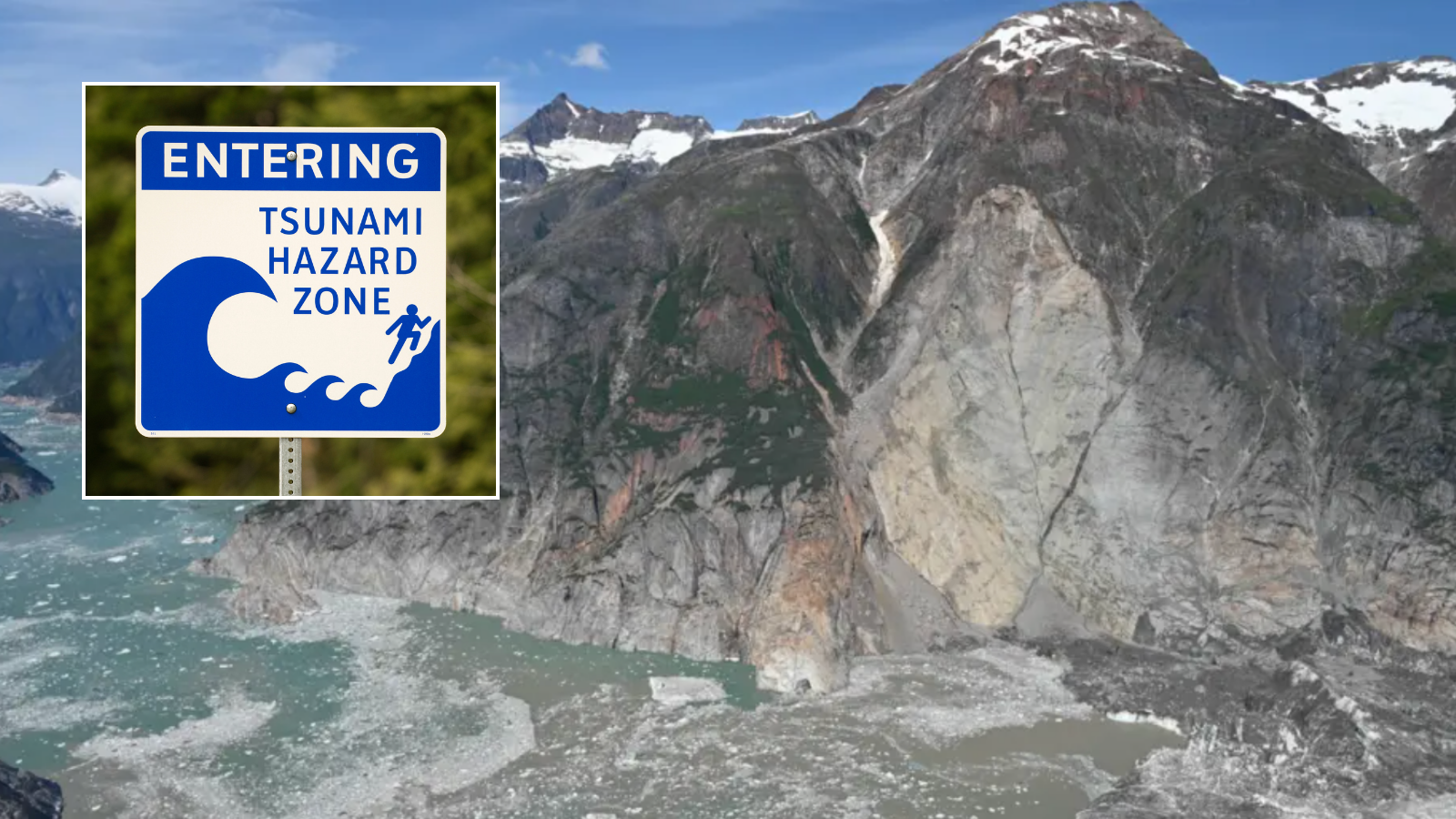
The catastrophic event at Tracy Arm Fjord in southeast Alaska saw approximately 64 million cubic metres of rock, equivalent to 24 Great Pyramids, crash into the water in less than 60 seconds.
This enormous volume of debris generated a wave reaching nearly 500 metres in height.
The incident, which initially received little attention, has now been analysed by researchers who determined that minor seismic activity triggered the devastating landslide.
TRENDINGStoriesVideosYour SayThe timing of the collapse, occurring during the early morning, prevented tourist vessels from being caught.
Dr Bretwood Higman, an Alaskan geologist who personally surveyed the aftermath at Tracy Arm Fjord, described the event as "a close call".
"We know that there were people that were very nearly in the wrong place," he said. "I'm quite terrified that we're not going to be so lucky in the future."
Arriving at the scene several weeks after the tsunami struck, Dr Higman witnessed extensive devastation across the landscape.
Shattered trees were scattered across the mountainside and thrown into the water below.
Large expanses of rock had been completely stripped of their soil and vegetation, leaving behind scarred terrain.
The fjord is a popular destination for cruise ships seeking Alaska's natural wonders.
Dr Stephen Hicks of University College London explained that a glacier had previously been "helping to hold up this piece of rock", and when the ice retreated, it exposed the base of the cliff face, "allowing that rock material to suddenly collapse into the fjord".
LATEST DEVELOPMENTS
- Oxford physicists achieve world-first breakthrough in quantum physics
- Extinct antelope to be resurrected with Jurassic Park technology
- Archaeologists baffled after Roman treasure from Hadrian's Wall is found over 1,000 miles away
Research published in Science indicates that glacier melting caused by climate change is significantly worsening the frequency of such collapses.
The scientific team utilised fieldwork alongside seismic and satellite information to piece together the sequence of events and calculate the wave's height.
Dr Higman expressed certainty that megatsunami risks are growing substantially.
"At this point, I'm pretty confident that these are increasing not just a little bit, but increasing a lot," he told the BBC.
"Maybe in the order of 10 times as frequent as they were just a few decades ago."
Dr Hicks and his colleagues, who have spent decades studying tsunamis, voiced concern about increasing tourist activity in hazardous regions.
"More people are now going to remote areas, often these tourist cruises are going to see the natural beauty of the area to actually learn more about climate change, but they are also dangerous places to be," he said.
Alaska faces particular vulnerability to these extreme waves due to its combination of steep mountainsides, narrow waterways and regular seismic activity.
Researchers are now urging expanded monitoring systems across Alaskan regions susceptible to megatsunamis.
Several cruise operators have already announced they will cease sending vessels into Tracy Arm Fjord due to safety concerns.
Our Standards: The GB News Editorial Charter

ملاحظة تحريرية | Editorial Note: نُشر هذا المقال في الأصل بواسطة GB News. خبر (Khabr) هي منصة إعلامية أردنية مرخّصة تعمل بالذكاء الاصطناعي. نضيف قيمة تحريرية من خلال: تحليل ذكي للأخبار، ملخصات تلقائية، رواية صوتية بالذكاء الاصطناعي، ترجمة متعددة اللغات، وتدقيق الحقائق. هدفنا جعل الأخبار أكثر وضوحاً وسهولةً للقارئ العربي.
This article was originally published by GB News. Khabr is a licensed Jordanian AI-powered news platform (Registration #82086). We add editorial value through: AI-powered news analysis, automated summaries, AI audio narration, multi-language translation (Arabic, English, French, Turkish), and AI fact-checking. Our mission is to make news more accessible and understandable for Arabic-speaking audiences worldwide.