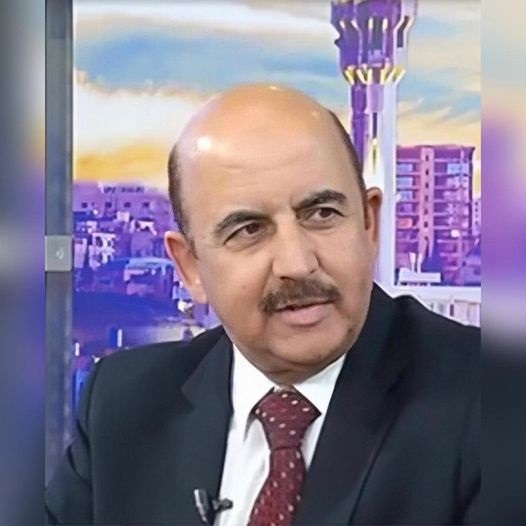
The spiritual leader of the Druze community in Suwayda (southern Syria), Hikmat al-Hijri, reaffirmed his support for Israel in its regional war alongside the United States against Iran.
In a statement issued on Tuesday, March 24, al-Hijri endorsed what he described as the “strategic direction of the allies” (the United States and Israel), praising their “courageous” steps and “bold” decisions.
He said these moves represent a “glimmer of hope” to eliminate the “roots of destruction” in the Middle East, arguing that the Iranian regime has destabilized the region and harmed its own people before others through isolationism, rejection of others, regional hostility, and undermining the security and stability of societies.
Al-Hijri added that “Jabal Bashan” (Suwayda province) had also suffered during the era of the former Syrian regime because of “systematic policies” that tied economic development to attempts at “forced conversion to Shiism”, ideological dependency, and interventions that sidelined local expertise and communities from positions they deserved.
The statement comes amid the ongoing confrontation between Israel and the United States on one side and Iran on the other, whose impact has extended across the region, including Syria, which has been affected by projectiles exchanged between the parties.
Israel is considered a key ally and supporter of al-Hijri in Suwayda, having backed him politically and militarily against the Syrian government.
Al-Hijri suggested that the current government is an extension of the former regime, stating, “The operator and sponsor have changed, but the objective remains the same,” while affirming his support for any international effort seriously aimed at eradicating the “roots of terrorism,” regardless of its source.
Insistence on “self-determination”
The peak of tensions between the government and al-Hijri dates back to July 2025, when clashes erupted between government forces and local factions with a Druze character, following fighting between those factions and Bedouin tribes in Suwayda.
Since then, al-Hijri, who has become the spiritual authority for the military and administrative bodies managing Suwayda and a key decision-maker in the city, has declared a break with the government in Damascus.
He continues to insist on the principle of “self-determination,” referring to separating Suwayda from Syria and establishing self-administration with Israeli support.
“We adhere to our Druze cause and our inherent right to self-determination, in accordance with international laws and conventions that guarantee the rights of oppressed peoples, to obtain our full rights, relying on our own strength and the support of our strong allies, foremost among them the State of Israel, to build a safe and stable future away from the dominance of gangs and terrorism,” he said.
Al-Hijri also pointed to what he described as the “continued random shelling of civilian homes and the killing of innocent people and passersby,” adding that “as shells of hatred fall on the homes of civilians in Jabal Bashan, they also fall on civilians in the State of Israel.”
He considered that the “enemy” shares an ideological stance of targeting anyone seeking a “free and dignified life,” stating that what he called “terrorist gangs,” regardless of their origin, only speak the “language of killing,” making stability in their presence impossible.
US-mediated initiative
Despite the rupture between the government and the “National Guard” forces in Suwayda, international and regional actors, particularly the United States, are attempting to bridge the gap between the two sides.
Washington sponsored a detainee exchange on February 26, involving 25 detainees held by the “National Guard” in exchange for 61 held by the government.
However, researchers and observers told Enab Baladi that the US initiative aimed to prevent further escalation in the region and avoid uncertain outcomes, as well as stop any potential armed confrontation between the government and local factions in Suwayda.
Al-Hijri thanked those who worked publicly and behind the scenes to complete what he described as a “humanitarian effort,” noting that efforts are ongoing to secure the return of all “kidnapped persons” (those detained by the government), suggesting the possibility of further exchange deals.
Suwayda crisis
Suwayda province has been experiencing a complex crisis since the early stages of the former regime’s collapse, as the new administration attempted to integrate factions into the state, but the process stalled because of a lack of consensus.
In July 2025, the Syrian army attempted to enter the city, citing the need to stop clashes between the Druze majority and Bedouin residents.
The government intervention was accompanied by violations against Druze residents, leading to widespread clashes and prompting Israeli involvement, with Israel repeatedly signaling its intent to protect Druze communities in Syria, citing kinship ties.
The situation escalated further with Israeli strikes on Damascus and attacks targeting Syrian army forces that had entered the city center.
These strikes forced government forces to withdraw from Suwayda city and redeploy in the western countryside, where they took control of more than 30 villages.
However, the withdrawal did not resolve the crisis. It became more complex after local factions committed retaliatory violations against Bedouin residents, triggering tribal mobilizations in support of Bedouin communities in Suwayda and resulting in continued clashes and violations on both sides.
Syrian national committee submits final report on Suwayda events, outlines key findings
The post Al-Hijri reaffirms support for the US and Israel in the war against Iran appeared first on Enab Baladi.