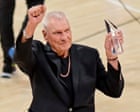
Aaron Rai acknowledges the crowd on the 13th green after a birdie that helped him win the PGA Championship. Richard Heathcote / Getty Images Share articleNEWTOWN SQUARE, Pa. — Somebody had to grab it. Surely it would be Jon Rahm. Maybe Ludvig Åberg could play the hero. Rory McIlroy and Xander Schauffele lurked nearby, too. So many of the thousands upon thousands that packed Aronimink Golf Club on Sunday had to have thought that one of golf’s superstars had to emerge from this historically congested leaderboard to win the PGA Championship. But it was Aaron Rai — a 31-year-old Englishman — who conquered Aronimink’s final 10 holes while his peers all sputtered to win his first major championship. It was Rai’s 40-foot eagle putt on 9 that thrust his name into contention. It was Rai’s approach to 4 feet on No. 11 that led to a birdie and some breathing room. And it was Rai’s 209-yard approach into the 16th green that sealed the deal. At 4 p.m. local time, Rai had just bogeyed two of three holes and fallen three back of the lead. By 5:27, he was pulling away with the PGA Championship to become the first Englishman to win the Wanamaker Trophy since 1919. When Jim Barnes won the first two PGAs, in 1916 and ’19, it was still decades from becoming a major championship. So it’s Rai who is now the most accomplished Englishman in this event. He’s a golfer who’s never finished better than tied for 19th in a major, whose putter woes cost him so much in 2026 he no longer qualified for the PGA Tour’s signature events, and who took a fifth-place finish at the alternate-field Myrtle Beach Classic a week ago to find some form, withstood four days of difficult, windy conditions for the week of his life. He entered the tournament 117th on the PGA Tour in putting. He ranked fifth on Aronimink’s daunting greens. Rai stands out on PGA Tour courses in ways that elevate his story. He’s perhaps been best known to this point for wearing golf gloves on both hands and using covers for each of his irons, a rarity for anybody in golf, let alone the pros. Rai still remembers his father, Amrik, seated after a long day of watching his son practice in Wolverhampton, England, cleaning each groove with a pin and baby oil. That set of Titleist 690 MBs that Amrik bought for an 8-year-old Rai? Those were nearly a thousand pounds, money his father, the community worker, didn’t really have. They needed to be protected, so Amrik suggested iron covers, like the kind normally used for a driver, woods and the putter. Others may have poked fun at the level of protection, but Rai did not care. He maintained them into his 30s as he went from the lowest levels of golf to making millions of dollars each year. His bag is sponsored not by one of the golf brand goliaths, but by “Me and My Golf,” an instruction company created by the two coaches who took him on at 12. He is the lone golfer on tour to wear two gloves, a tradition dating back to the local Wolverhampton company MacWet, which sent him a pair when he was 8. Rai turned pro at 17 because he needed to, but he wasn’t ready. He rose from the dregs of European professional golf — from the developmental EuroPro Tour to the Challenge Tour to the DP World Tour. Over 10 years, little by little, he’s gotten one shot better, and another shot better, and over and over until he was on the PGA Tour. He doesn’t hit it long. He still doesn’t have an agent, relying on his wife to fulfil some managerial duties. But by last year, Rai was ranked No. 18 in the world and a European Ryder Cup contender. Instead, his play faltered through the summer, and he was no longer even a candidate for a captain’s pick. He won a DP World Tour event in Abu Dhabi in November, but come the 2026 PGA Tour season, Rai lost his form. He failed to earn a single top-20 finish in a full-field event, with Myrtle Beach the first sign of success in six months. For the first two rounds outside Philadelphia, Rai held his own while the difficult course crushed so many others. He played the first round in even par before getting to 1 under through 36 holes, two back of the lead. It was Saturday, though, when Rai first stated his claim. He birdied 10 and 11, two of the toughest holes of the tournament, to propel himself toward the top of a leaderboard that had at least 22 names still in the hunt. He was in the third-last group on Sunday and fell four back of the lead in the first eight holes with three bogeys and two birdies. Yet on Aronimink’s final 10 holes, nobody could hold a candle to the new PGA Champion. His back-nine 31 is equal to the best finish of the tournament. His 68-foot putt on No. 17 elevated his victory from an impressive showing to a convincing rout. So no, it was not Rahm, or Åberg, or McIlroy or Schauffele who cemented themselves as a major great Sunday afternoon at Aronimink. It was Aaron Rai who got his name engraved on the Wanamaker Trophy and made himself a name we’ll soon remember. Spot the pattern. Connect the terms Find the hidden link between sports terms
المصدر: The Athletic
| Source: The Athletic
ملاحظة تحريرية | Editorial Note:
نُشر هذا المقال في الأصل بواسطة The Athletic.
خبر (Khabr) هي منصة إعلامية أردنية مرخّصة تعمل بالذكاء الاصطناعي.
نضيف قيمة تحريرية من خلال: تحليل ذكي للأخبار، ملخصات تلقائية، رواية صوتية بالذكاء الاصطناعي، ترجمة متعددة اللغات، وتدقيق الحقائق.
هدفنا جعل الأخبار أكثر وضوحاً وسهولةً للقارئ العربي.
This article was originally published by The Athletic.
Khabr is a licensed Jordanian AI-powered news platform (Registration #82086).
We add editorial value through: AI-powered news analysis, automated summaries, AI audio narration, multi-language translation (Arabic, English, French, Turkish), and AI fact-checking.
Our mission is to make news more accessible and understandable for Arabic-speaking audiences worldwide.