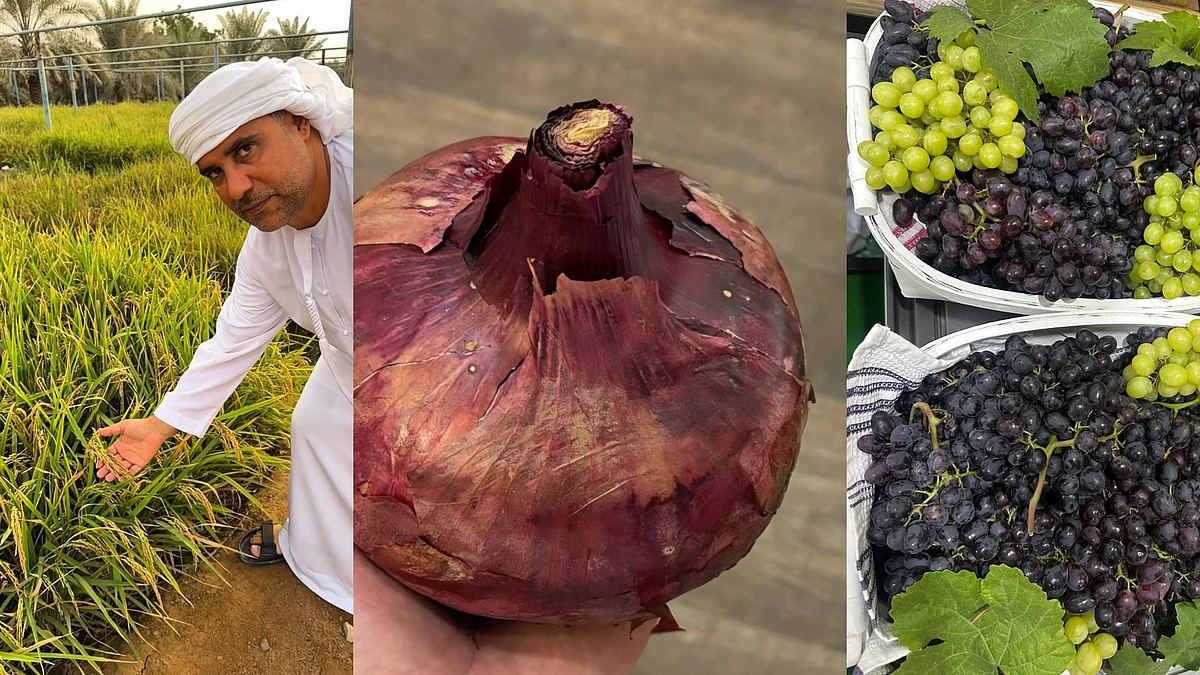
A 1.6-kilogram onion, grapes in the desert of Al Ain, more than 37 varieties of wheat growing in Ras Al Khaimah—they are the fruits of a quiet agricultural revolution taking place across the UAE, driven by Emirati farmers who have spent decades learning, experimenting, and refusing to accept that the desert sets the limit of what can grow here.
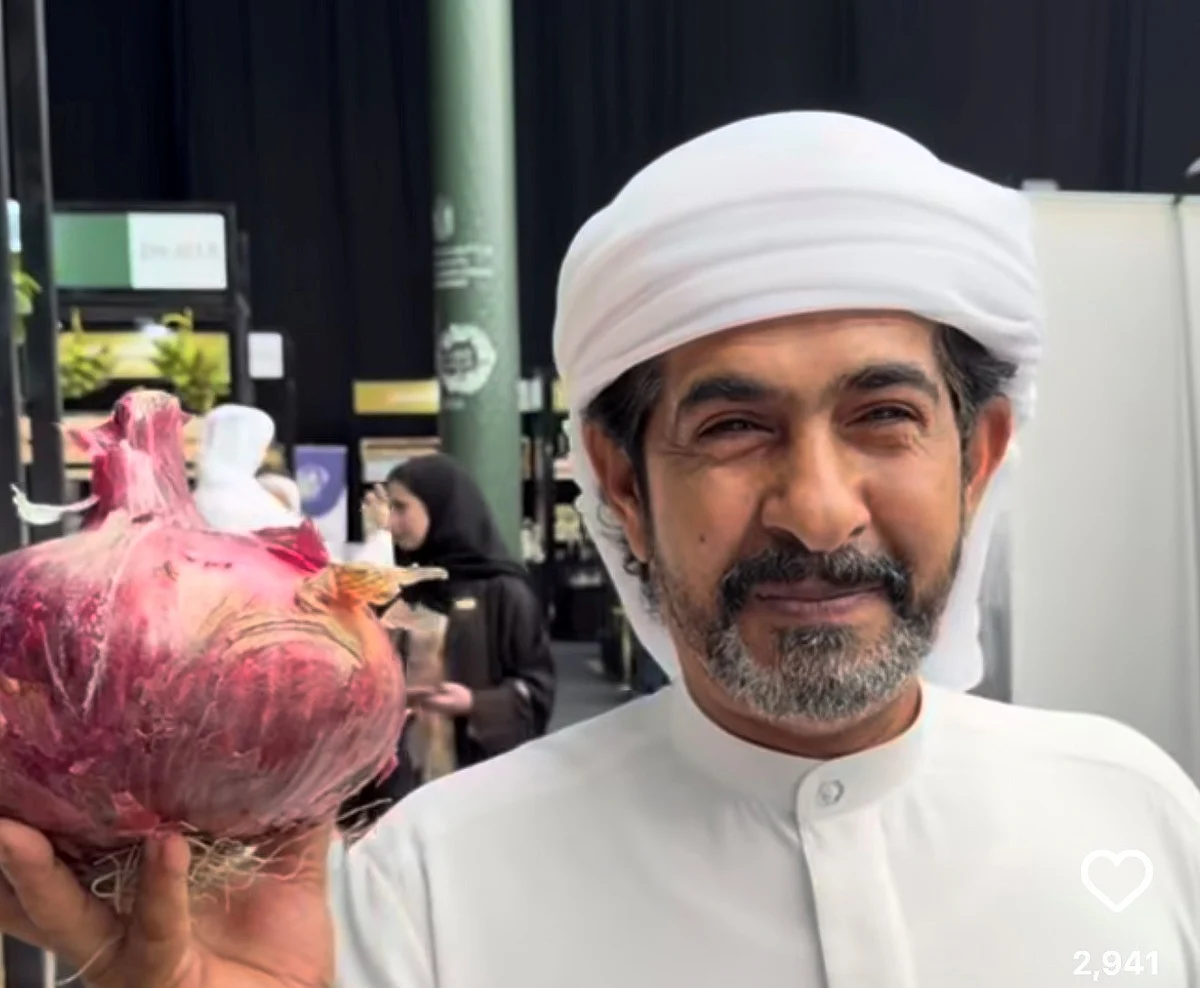
Saeed Mohammed Al Muaili holding a large onion
1.6kg onion
Saeed Mohammed Al Muaili’s story began in 1979 when he used to helo his father on the family farm. “I come from a family that loves farming,” Al Muaili said. “I used to imitate my father, and I succeeded in this field.”
His early successes with seeds including mango varieties gave him the confidence to keep pushing. Over the years, the Al Ain Agricultural Exhibition became a second home, a place where Al Muaili found not only an audience for his work but also the competitive energy that sharpens a farmer’s ambition. “The exhibition is very special, and the competitiveness in it is a beautiful thing, it pushes you to reach your goal,” he said.
Stay up to date with the latest news. Follow KT on WhatsApp Channels.
That competitive spirit recently produced one of his most remarkable achievements, an onion weighing approximately 1.6 kilograms. For Al Muaili, it was not a final destination but a starting point. “The size I reached with the onion about a kilo and a half was an experiment,” he said. “God willing, next season will be even better.”
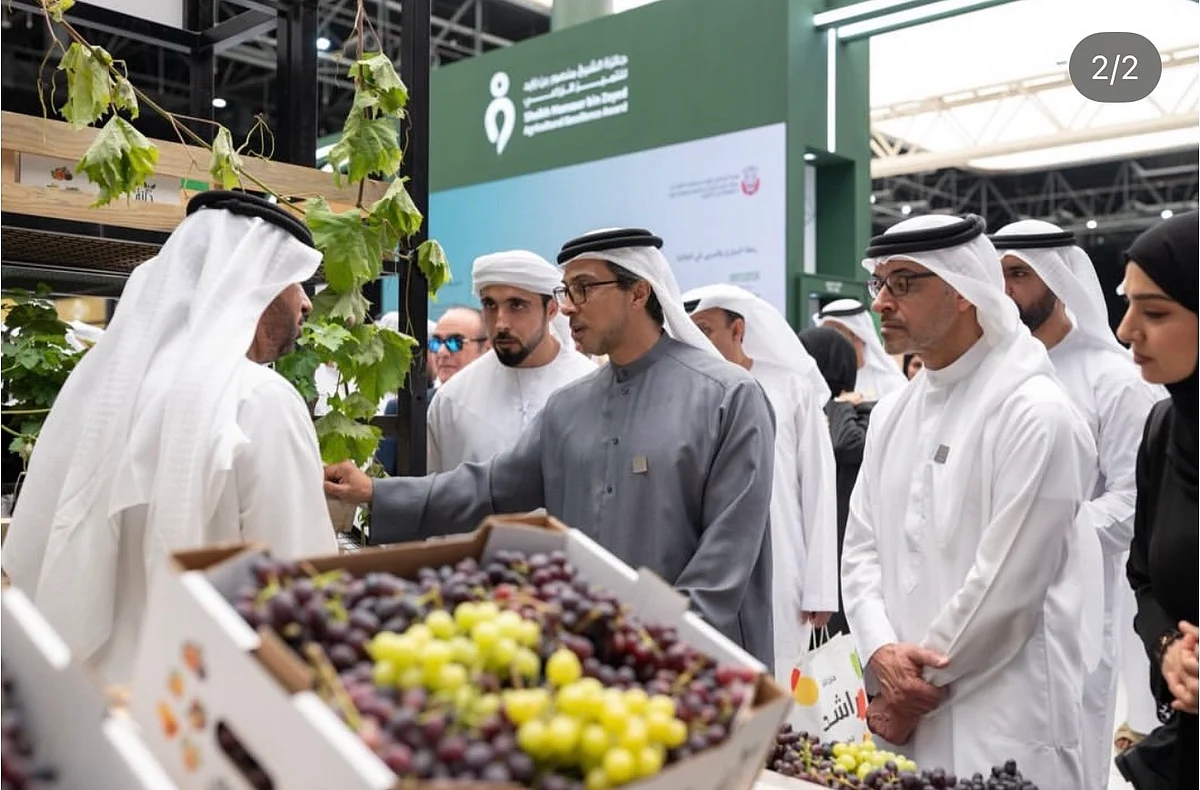
Saeed Saif Al Murr Al Kaabi with Sheikh Mansoor bin zayed during the Al Ain Agricultural Exhibition.
Grapes in the desert: ‘Nothing is impossible’
In the city of Al Ain, Saeed Saif Al Murr Al Kaabi has built a flourishing grape farm in one of the UAE’s hottest cities. Al Kaabi’s passion for agriculture took root in childhood, during visits to his father’s farm. “I had a great passion to own a farm and manage it myself, and to grow the finest crops,” he said.
But passion alone was not enough. Al Kaabi invested years in building his knowledge, visiting model farms across the UAE and making agricultural tourism a central part of every trip abroad. “Whenever I travelled, most of my programme was visiting farms and learning about their crops,” he said. “I would bring ideas back and apply them on the ground.”
Today, Al Kaabi is the owner of Danat Al Ain Farm, which is home to some of the finest fruit varieties in the region. Its most ambitious project is the grape cultivation initiative, which Al Kaabi pursued despite the challenges of the local climate.
He planted 1,200 grapevines across six different varieties, and after two years, the results have exceeded expectations delivering excellent yields earlier in the season than anticipated.
“The project is two years old now and has proven its success in Al Ain,” Al Kaabi said. “The production was excellent and early.” He is now convinced that the UAE can grow virtually any fruit, provided the farmer brings the right expertise to the task. “Today, there is nothing impossible that does not succeed in fruits in the Emirates but it requires someone with experience and knowledge,” he said.
His message to UAE farmers is clear: “Do not accept the idea of the impossible. Seek knowledge, go to those who have succeeded, and bring agricultural culture to this country.”
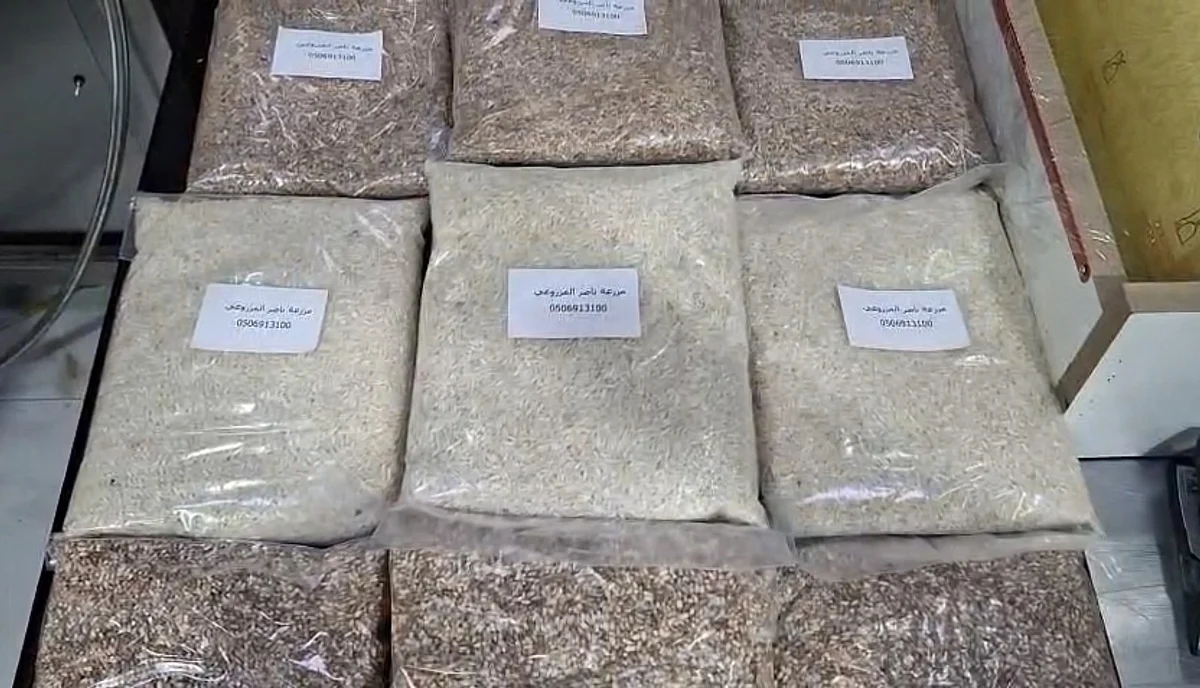
Rice from Nasser Saeed Al Mazrouei's farm.
37 wheat varieties and counting
In Ras Al Khaimah, where Nasser Saeed Al Mazrouei has spent nearly a decade quietly building one of the most diverse grain farms in the UAE. His collection now spans over 37 varieties of wheat, four types of rice Basmati, Hasawi, Anbara, and a dark brown variety alongside barley, red seed, millet, oats, and black seed.
Al Mazrouei’s journey into grain farming began with wheat, cultivated alongside a group of friends who shared his enthusiasm for the land. After eight or nine years of wheat farming, the group decided to take on a greater challenge. “We had been planting wheat for about eight or nine years. Then we decided to try rice. We planted on our farms and tested different methods,” he said.
Although the project began collectively, Al Mazrouei eventually developed his rice cultivation independently, sourcing seeds from fellow farmers whose supplies had been imported from India and Pakistan.
His farm, spanning approximately 300 by 300 metres, operates entirely without chemical inputs. To address rice’s high-water demands, Al Mazrouei uses clay soil collected from nearby dams, which retains moisture for extended periods.
Seeds are first planted in a nursery for up to 45 days before being transferred to the main field. The growing season runs from mid-June through to October. Al Mazrouei visits the farm twice daily at dawn and in the evening to monitor progress and ensure healthy growth. His annual rice yield currently stands at 60 kilograms, and he plans to introduce additional varieties in the coming season.
He also opens the farm to visitors, particularly school students, believing that sharing knowledge is as important as growing crops.